How Professional Tree Surgery Helps Maintain Healthy and Well-Structured Trees in Gamston, Nottingham
Trees are an important part of many gardens and outdoor spaces, providing natural beauty, shade and valuable habitats for wildlife. However, keeping trees healthy and well-structured requires more than allowing them to grow naturally. As branches develop and the tree matures, some areas may become overcrowded, damaged or poorly balanced. Without appropriate care, these issues can affect the tree’s condition, appearance and long-term stability.
Professional tree surgery helps manage growth, remove problematic branches and maintain a suitable structure. For property owners in Gamston, Nottingham, understanding the benefits of regular tree maintenance can make it easier to keep trees in good condition while ensuring they remain appropriate for their surroundings.
Encouraging Healthy Tree Growth
Healthy growth depends on a tree having enough space, light and access to essential resources. When branches become overcrowded, they may compete for sunlight and air circulation. This can leave some parts of the canopy weaker and make the overall shape less balanced.
Selective pruning can help improve the arrangement of branches by removing unsuitable growth and allowing the remaining canopy to develop more evenly. Removing dead, diseased or damaged sections also reduces the presence of unhealthy material within the tree.
Professional tree surgeons understand how different species respond to pruning. They can assess which branches should be removed and how much growth can be safely taken back without placing unnecessary stress on the tree.
Maintaining a Balanced and Well-Structured Canopy
A tree with an uneven or overcrowded canopy may develop structural problems as it grows. Branches that extend too far in one direction can create an imbalance, while crossing or rubbing branches may cause wounds where their surfaces repeatedly make contact.
Crown thinning can help reduce excessive density by selectively removing certain branches throughout the canopy. This allows more light and air to pass through without significantly changing the tree’s natural shape.
Crown reduction may also be suitable where a tree has grown beyond the space available for it. The work involves carefully reducing selected branches while retaining a natural appearance and appropriate structure.
The correct approach depends on the tree’s species, age, condition and location. Professional assessment helps ensure that pruning supports the tree rather than unnecessarily weakening it.
Removing Dead, Diseased and Damaged Branches
Dead and damaged branches can affect both the health and safety of a tree. They may break away during strong winds or continue to deteriorate while remaining attached to the canopy.
Diseased branches can also affect the appearance and condition of the tree. Identifying affected areas early allows suitable work to be carried out before the problem becomes more extensive.
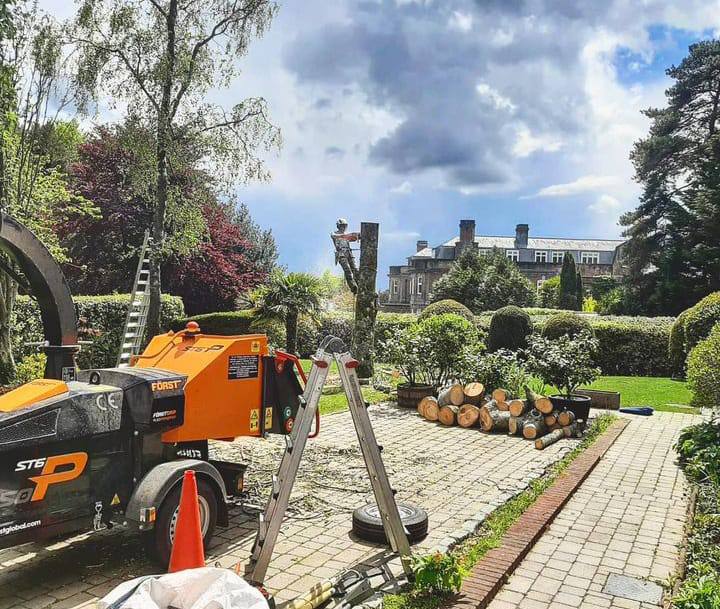
Tree surgeons can inspect the canopy, identify branches that require attention and remove them using appropriate techniques. Careful pruning also helps avoid unnecessary damage to healthy growth and surrounding parts of the tree.
Improving Light and Airflow Around Trees
Dense foliage can create heavily shaded areas beneath a tree and restrict airflow through the canopy. This may affect the appearance and usability of nearby garden spaces, particularly where branches have spread extensively.
Selective crown thinning can improve light penetration and air movement while preserving much of the tree’s natural form. This can make outdoor areas feel more open without requiring the tree to be heavily cut back.
It is important to avoid excessive pruning simply to increase sunlight. Removing too much foliage can place stress on a tree and interfere with its ability to produce energy. A professional tree surgeon can recommend a suitable level of work based on the tree’s condition and the surrounding environment.
Choosing the Right Tree Surgery for Each Tree
Not every tree requires the same maintenance. Some may benefit from occasional crown thinning, while others need deadwood removal, crown reduction or more targeted pruning to address structural concerns.
The tree’s species, maturity, existing condition and position should all be considered before work begins. Poor pruning practices, including indiscriminate cutting or removing too much of the canopy, can lead to weak regrowth and long-term damage.
Gamston Tree Surgeons can assess individual trees and identify the most appropriate maintenance work. A considered approach helps preserve healthy growth, maintain a balanced appearance and keep trees suitable for their surroundings.
Conclusion
Professional tree surgery plays an important role in maintaining healthy, well-structured trees. By removing damaged growth, managing overcrowded branches and improving the overall canopy, suitable maintenance can support long-term tree health and help prevent avoidable problems.
For property owners in Gamston, Nottingham, regular attention can make a meaningful difference to the condition and appearance of trees. If a tree in your garden needs pruning, assessment or general maintenance, contact Gamston Tree Surgeons to discuss the work required.
Call us on: 0115 697 1170
Click here to find out more about Gamston Tree Surgeons
Click here to complete our contact form and see how we can help with your tree needs.